

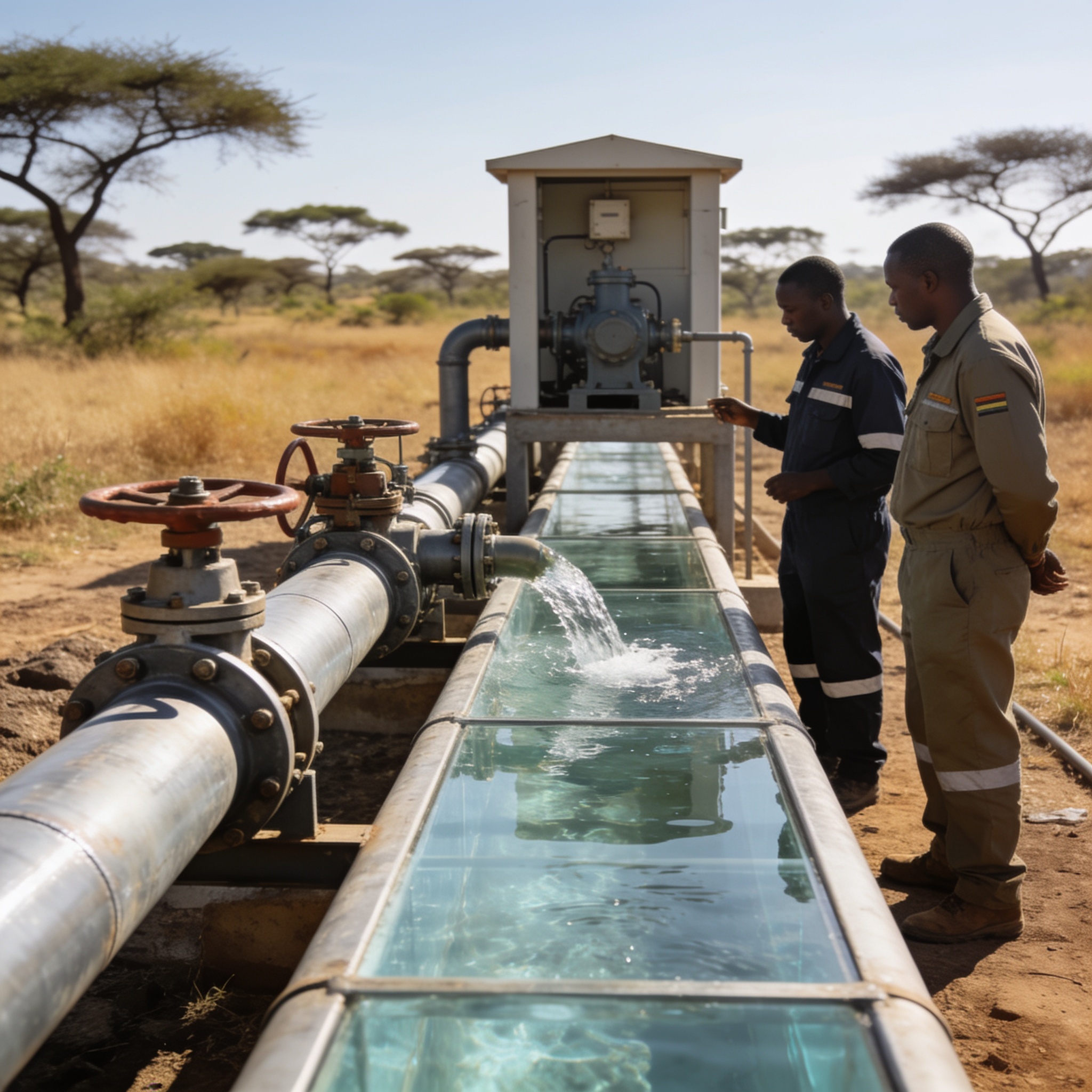
Bindura’s long-running battle with water shortages has entered a new phase after the commissioning of a 22.1-kilometre pipeline that connects the town to Masembura Dam, giving it a second raw water source for the first time in decades.
The US$3 million Masembura Water Transmission Pipeline was financed jointly by Mutapa Gold Resources and Bindura Municipality, with the mining house covering 60 percent of the cost and the local authority contributing the remaining 40 percent. The Zimbabwe National Water Authority (Zinwa) implemented the project, which includes a 500-cubic-metre balancing tank.
A town that was running dry
The investment followed a stark warning in April 2025, when Mwenje Dam — one of Bindura’s principal sources — dropped to just 36 percent of capacity while the dry season was still gathering pace and the next rains were months away.
At the same time, Masembura Dam was sitting at roughly 90 percent capacity, a contrast that convinced Mutapa Gold Resources to back a project that had languished on the municipality’s books since 1992.
Mutapa Gold Resources chief executive Patrick Maseva-Shayawabaya said the falling dam levels were a threat not only to households but also to industrial operations, including Freda Rebecca Gold Mine, which depends on a steady supply of processing water.
“That was a clear red light to us that we potentially faced not having processing water at Freda Rebecca Gold Mine in the latter part of the season and that Bindura Town would also not have some water for human consumption,” he said.
He added that the company concluded it had to move quickly on what had been a long-discussed scheme in order to avert a broader crisis.
Thirty-four years on the shelf
Bindura Town Clerk Evelyn Madziire said the pipeline had been part of the municipality’s plans since 1992, and described its completion as transformative for service delivery and investor confidence.
“Water is the backbone of investment and a major driver of economic activity, without water there is no development to talk about,” she said.
Mashonaland Central Provincial Affairs and Devolution Minister Christopher Magomo, who was the guest of honour at the commissioning, said the town can now draw raw water from both the Mazoe River and Masembura Dam.
According to the minister, water drawn from Masembura has significantly reduced treatment chemical costs and overall production expenses, while the availability of two sources has shortened the time needed to refill reservoirs.
Magomo also pointed to the environmental pressures that had undermined the Mazoe River option, citing illegal alluvial gold mining upstream as a persistent threat to water quality.
He used the occasion to argue that infrastructure gaps of this kind cannot be closed by government alone.
“Government cannot do everything alone,” he said, describing the pipeline as an example of what partnerships between the State, local authorities and private companies can deliver.
What still needs fixing
Officials were quick to caution that the new pipeline does not solve every water challenge facing the town.
Bindura’s existing water treatment plant was built for a far smaller population and needs to be expanded, while the distribution network must be stretched into growing residential and developing areas.
In effect, the project secures a second source of raw water but shifts the pressure onto treatment and reticulation capacity, which must now keep pace with the town’s expansion.
For Mutapa Gold Resources, the pipeline forms part of a wider corporate social responsibility approach. Maseva-Shayawabaya said the company’s guiding principle is to leave host communities better off than it found them.
“We believe that mining must create value beyond production figures, beyond profitability, and beyond the life of a mine,” he said. “It must improve lives, support local resilience, and contribute meaningfully to the social and economic development of the communities that host our operations.”
Why it matters beyond Bindura
The project highlights a recurring theme in Zimbabwe’s urban water sector, where shrinking dam levels, ageing treatment plants and vandalised or underfunded distribution systems have combined to produce chronic shortages.
Bindura’s experience also underscores the role mining houses can play in financing public infrastructure when municipal budgets fall short — an arrangement that brings relief but also raises questions about how such partnerships are structured and sustained.
For now, residents who faced the prospect of severe rationing less than 18 months ago have an additional supply line, and the Freda Rebecca operation has secured a buffer against the kind of drought-driven disruption that threatened its processing capacity.
Whether the town’s treatment and distribution networks can absorb the new supply fast enough remains the next test.