

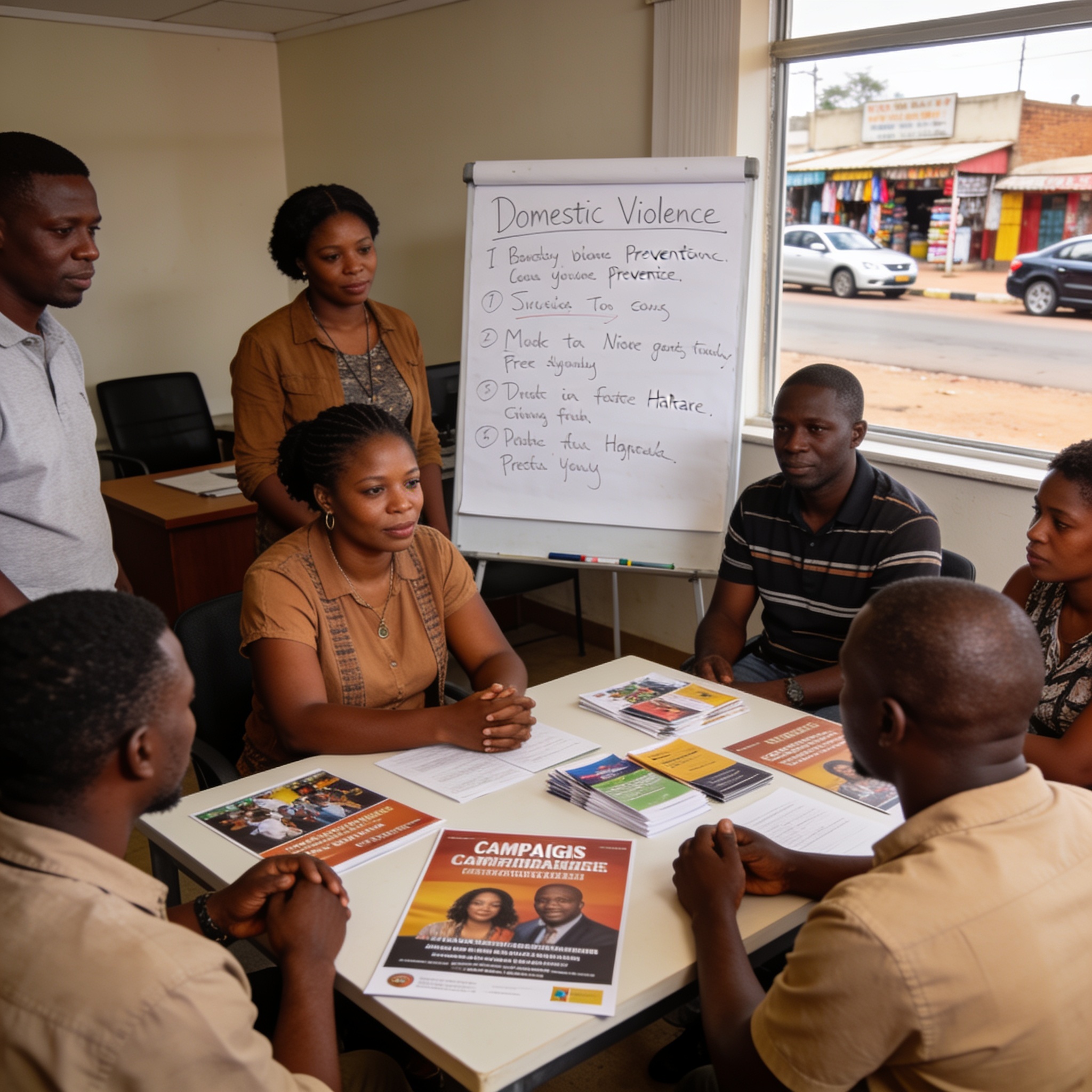
Harare, 2 October 2026 — Zimbabwe has opened a three-month public push against violence inside homes, as the Zimbabwe Gender Commission moved to widen prevention, reporting and survivor support after police data showed a heavy load of sexual and aggravated domestic cases.
The campaign, chairperson Leslie Ncube said, begins this month and runs to December, closing around the international 16-day mobilisation on gender-based violence. It is designed to shift the debate away from reacting after injuries, deaths or courtroom battles, and toward earlier intervention when signs of control, fear, repeated abuse or unresolved conflict first appear.
The commission pointed to police statistics showing at least 13,838 sexual offences and aggravated domestic violence cases recorded in 2024. Officials said some cases ended in grievous bodily harm, homicide or suicide, a pattern that strengthened the case for a coordinated national response.
Commission figures also draw on the 2023-24 Zimbabwe Demographic and Health Survey, which found that 27 percent of women aged 15 to 49 had experienced physical violence at some point in their lives, while 9 percent had experienced sexual violence.
Ncube warned that reported cases may understate the problem because fear, stigma, shame, threats, money pressure and weak access to help can keep victims quiet. The commission also noted that men and boys can experience intimate partner violence, though social expectations may discourage them from speaking out.
What the 90-day campaign focuses on
The initiative is built around several practical fronts: public awareness, stronger engagement with state institutions, involvement of men and boys in prevention, cooperation with churches, mosques, traditional leaders, community structures and workplaces.
A central message for the public is that abuse behind closed doors is not a household matter. It has consequences for health, schooling, productivity, child welfare and community safety, and it should be answered through services, reporting and accountability.
The commission also wants financing for gender-based violence work to become more Zimbabwean-led. Ncube said the country should move away from heavy reliance on outside donors and strengthen domestic funding through gender-responsive budgeting, so programmes can survive beyond short-term campaign calendars.
Link to the 2030 national plan
The campaign supports Zimbabwe’s broader political compact to end gender-based violence and harmful practices. Its roadmap aims to address sexual violence, child marriage and partner violence by 2030, with a target of reducing overall prevalence by 20 to 30 percent.
That plan places responsibility beyond police courts. It calls for early warning mechanisms in communities, training for officials, support networks for survivors and clearer pathways for people who need help.
Why this matters for Zimnewspaper.com readers
For many Zimbabweans, the issue is not abstract. It connects with the cost of transport, rent, school fees and family stress, and it shapes how communities respond when someone is hurt at home. The commission is urging people to report warning signs, employers to build referral systems and faith leaders to teach respect instead of silence.
Local observers say the campaign’s credibility will depend on how it is followed after December. If it leads to stronger referral systems, trained frontline workers, accessible survivor services and better domestic financing, it may become more than a seasonal awareness drive.
For now, the message from Harare is simple: homes should be safe places, and violence must be prevented before it becomes a tragedy.