

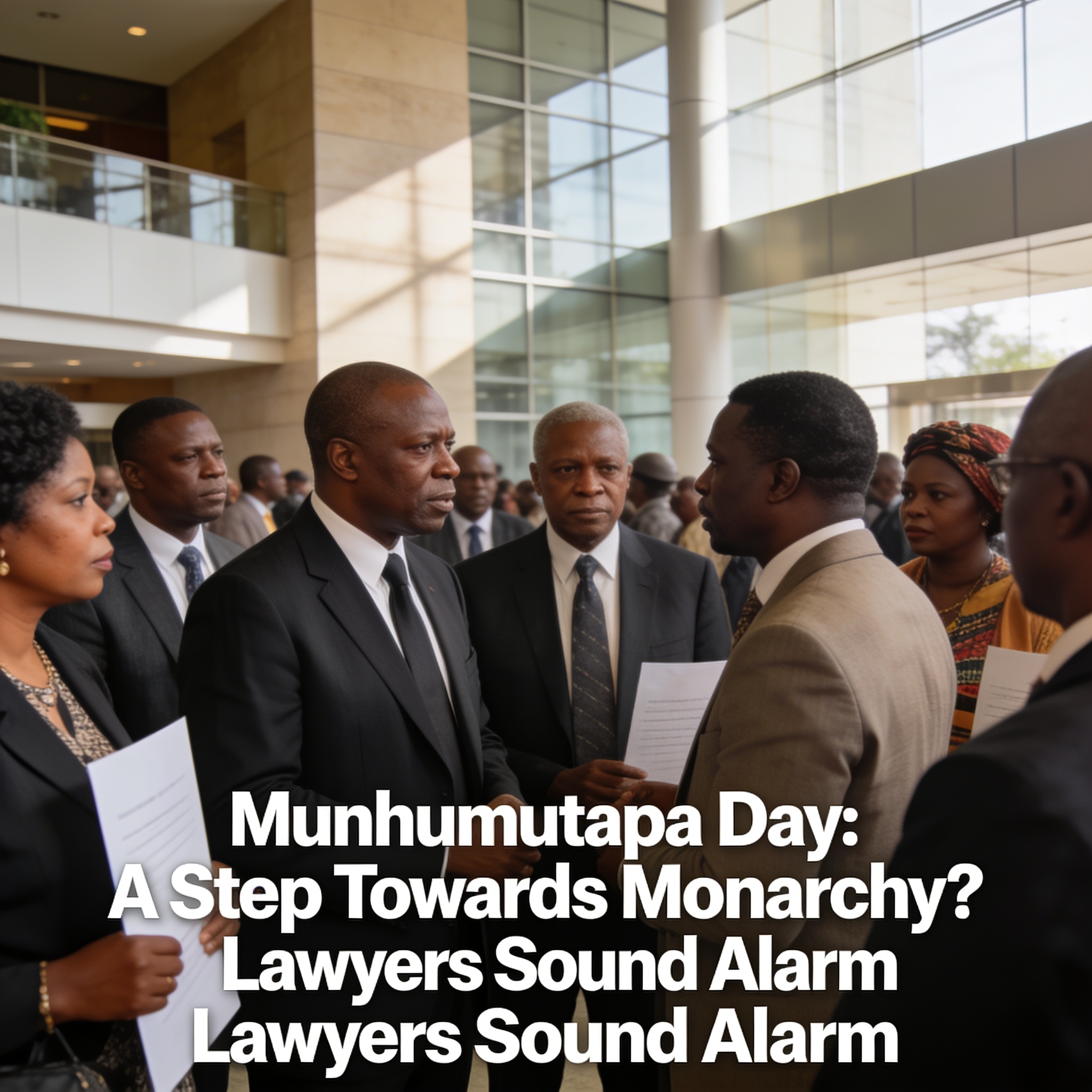
President Emmerson Mnangagwa has officially declared his birthday, 15 September, as a new national public holiday to be known as Munhumutapa Day. The declaration, made through Statutory Instrument 148 of 2026 under the Public Holidays and Prohibition of Business Act, was published in the Government Gazette Extraordinary on 9 September 2026. The notice states that the holiday will be observed every year from now on.
The move has sparked intense debate among legal scholars, opposition figures, and civil society groups. Prominent lawyer Advocate Thabani Mpofu has warned that the declaration should not be dismissed as mere political theatre. Writing on social media platform X, Mpofu described it as “the beginning of an attempt to alter our constitutional order; perhaps the first step towards a monarchy.” He emphasised that the timing of the announcement, which coincided with signals that President Mnangagwa intends to remain in power beyond 2030, should give the nation serious pause.
Mpofu rejected the idea that the declaration is a product of “senile madness,” instead calling it “a desecration” of Zimbabwe’s constitutional framework. He argued that the move sits between recent constitutional amendments and an emerging push by some ZANU PF supporters to transform the presidency into a monarchy. The lawyer’s remarks echo growing concerns that the ruling party may seek to further entrench executive power.
Munhumutapa, also spelled Mwenemutapa, was the royal title of rulers of the pre-colonial Mutapa Empire, which emerged in the 15th century and covered parts of modern-day Zimbabwe and Mozambique. The title translates roughly as “lord of the conquered lands.” By adopting this name for a holiday tied to the president’s birthday, critics say the government is attempting to equate the current leadership with a historical royal legacy, potentially undermining the republican character of the state.
The declaration comes just months after Mnangagwa pushed through a constitutional amendment extending his second term from five to seven years. Combined with the new holiday, these moves have fuelled speculation that the president may be testing the waters for a more permanent hold on power. Some of his allies have openly suggested converting the presidency into a monarchy, a proposal that would require significant constitutional changes.
Opposition parties and pro-democracy groups have condemned the holiday as a personality cult. They argue that national holidays should reflect shared historical events or values, not an individual’s personal milestone. The Zimbabwe Human Rights Commission and other watchdogs have expressed concern over the erosion of constitutionalism and the rule of law.
Supporters of the president, however, view Munhumutapa Day as a celebration of Zimbabwe’s rich pre-colonial history and civilisation. They argue that honouring the Mutapa Empire’s legacy is a positive step in reclaiming African identity. Government officials have framed the holiday as an educational tool to inspire pride in the nation’s heritage.
Legal analysts note that while declaring a public holiday is within the president’s statutory powers, the political symbolism cannot be ignored. The choice of name, the alignment with the president’s birthday, and the broader context of constitutional amendments create a troubling pattern. Experts warn that if such steps are allowed to continue unchecked, Zimbabwe may find itself on a slippery slope towards authoritarianism.
For now, the first Munhumutapa Day is set to be observed on 15 September 2026. Whether it becomes a harmless annual celebration or a stepping stone to far-reaching constitutional changes remains a matter of intense national debate. As the country approaches the date, all eyes will be on how the government chooses to mark the occasion and whether further legal or political moves follow.