

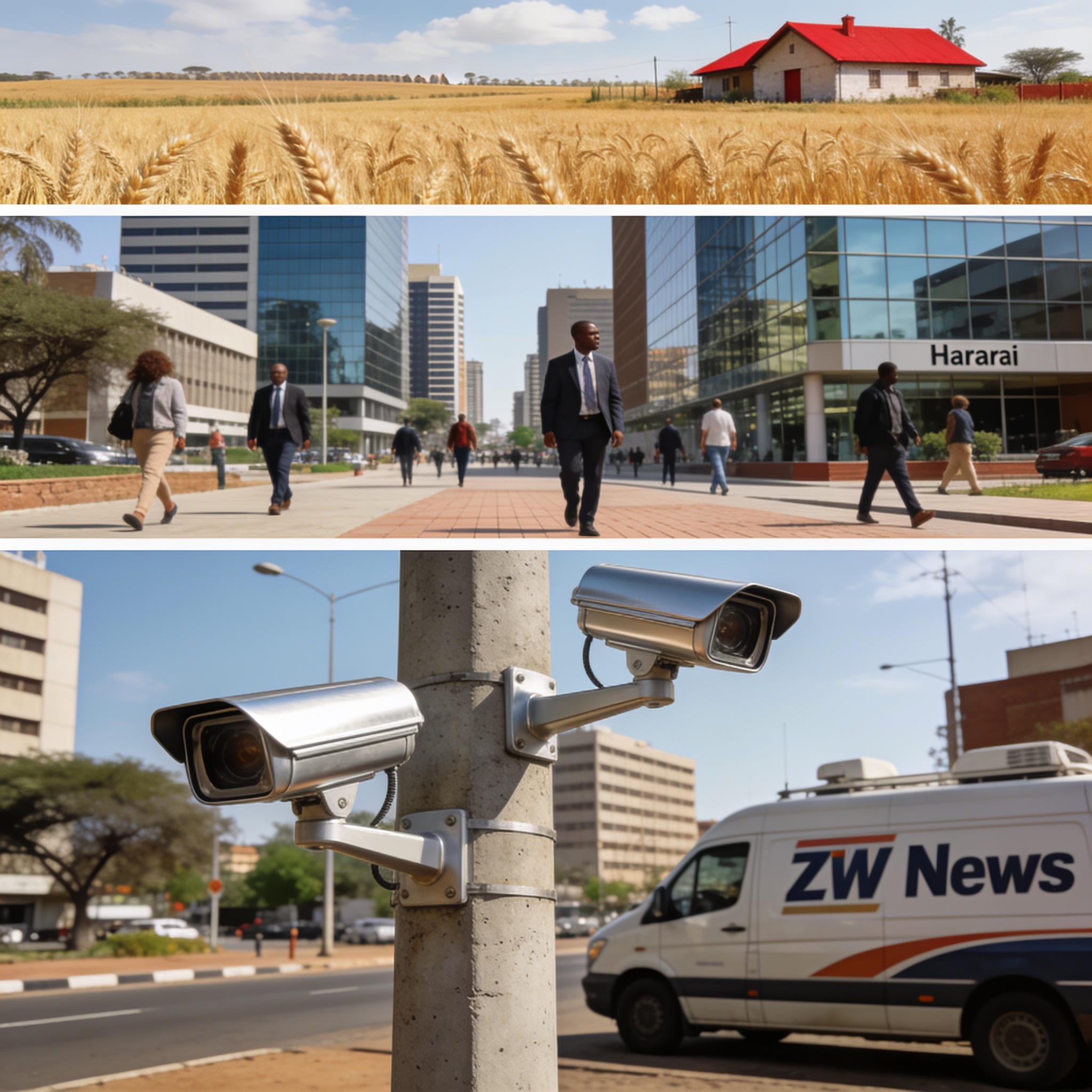
HARARE – Zimbabwe’s headlines on 28 September 2026 captured a country working on several fronts: farmers planning for uncertain rain, investors seeking access to a major industrial opportunity, border crossings moving more cargo, Harare’s road surveillance system recording millions of suspected offences, and football supporters turning a national-team return into a sell-out event. Taken together, the stories show how policy, weather, trade, enforcement and culture shape daily expectations.
Farmers are being asked to plan around rain, not habit
As the 2026/27 summer cropping season approaches, the strongest practical advice is for growers to match crop selection, planting dates and field techniques to the likely rainfall pattern and ecological zone. Maize may remain attractive, but in drylands it can be risky if rains arrive late or stop early. Millet, sorghum, groundnuts, cowpeas and other moisture-conscious alternatives may give better returns when water is scarce.
The warning is not a call to abandon cultivation. It is a reminder that Zimbabwe’s farming calendar now needs flexible risk management: small irrigation where feasible, moisture conservation, staggered planting, realistic expectations about input costs, and choices that match what the land can sustain. A meteorological alert for isolated thunderstorms in parts of the country adds to the need for close attention to local weather, not just national forecasts.
For rural households, the outcome matters beyond food: farm income affects school fees, transport, savings, debt repayment and confidence in the next season.
A Dangote refinery listing opens a door for local investors
Harare-based financial adviser Bard Santner Inc has been appointed as the channel for Zimbabwean clients wanting to participate in the public offering of Dangote Petroleum Refinery and Petrochemicals FZE, the industrial venture led by Aliko Dangote. The firm says it is helping eligible investors with application forms, identity checks, compliance documents, foreign-exchange procedures and capital-importation paperwork ahead of the wider offer closing.
The offering is framed as a rare chance for Zimbabwean portfolios to enter a major African industrial platform. The refinery is selling billions of ordinary shares priced in naira, with expected proceeds around US$1.6bn and a possible larger total if an overallotment is exercised. The money is expected to support expansion at the Lekki facility in Lagos, including plans to lift processing capacity toward 1.4 million barrels a day by 2029.
Investors should not treat the opportunity as simply an IPO headline. Zimbabweans need to review the prospectus, confirm exchange-control rules, assess naira and foreign-currency exposure, and understand that industrial assets can deliver long-term value but not quick local cash. The deal also intersects with a broader Dangote conversation in Zimbabwe, covering possible cement, mining, energy, transport and infrastructure links.
Northern border flow shows trade discipline can work
The Cuchamano/Nyamapanda crossing with Mozambique is clearing an average of about 80 trucks daily, according to trade-related reports. Longer opening hours and better coordination appear to be reducing waiting times on a route that matters for regional commerce. For exporters, importers and fuel transporters, smoother border procedures mean lower inventory holding costs, more reliable delivery windows and a stronger position within Southern African Development Community trade goals.
Border efficiency is a quiet form of economic diplomacy. It may not attract the attention of a global investment conference, but it affects prices, employment and confidence more directly than many speeches. If Harare’s electronic traffic enforcement and trade-facilitation reforms work together with regional corridors, Zimbabwe can present a more serious business climate without needing to rely on promises alone.
Harare cameras show enforcement is becoming data-driven
Harare police say a fresh AI-enabled road monitoring project has logged over four million suspected breaches after 20 cameras were activated at major intersections. The system is intended to detect crossings against red signals, driving the wrong way, stopping where passengers are not permitted, excessive speed, handheld phone use and failure to buckle up.
Two points deserve attention. First, the camera count is only an initial phase, with a planned expansion beyond 300 units and future use in other cities. Second, not every detection is necessarily a final charge; verification is required before penalties are issued. For citizens, this creates an opportunity to reduce road chaos without relying solely on officer presence. For authorities, the credibility of the programme depends on clear communication, fair review and transparent use of revenue.
Football returns home, and Zimbabweans fill the stands
The Warriors’ first AFCON 2027 qualifier at the National Sports Stadium in nearly five years became a demand surge before the match against the Democratic Republic of Congo. Supporters bought out ordinary passes online and then physically, prompting the football association to warn fans without tickets not to travel to the venue.
The sell-out is more than a sports story. It reflects a public appetite for national events, civic normalcy and shared pride after years when local matches lacked the atmosphere of a fully working stadium. A sold-out fixture also becomes a management test: transport, parking, security, vendors, crowd flow and communications all need to work smoothly. If Zimbabwe can deliver that experience safely, it can use sport to restore trust in public spaces.
Jobs, mining, streets and social balance
Young miners welcomed government policy that keeps small-scale gold mining opportunities for Zimbabwean citizens, arguing it protects livelihoods and local participation in mineral value chains. Employment surveys meanwhile indicated a relatively steady labour market in the first quarter, with wages rising sharply for many workers, even as cost-of-living pressures remain a common concern.
Other civic tensions appeared in community debates about informal traders, local authority enforcement and the spread of liquor outlets. Harare vendors say designated markets can become economically empty if they remove traders from the foot traffic that sustains them, while municipal officers say regulation is needed to keep pavements, roads and public order manageable. In some towns, the argument has taken a darker turn when bottle stores and beer halls appear to outnumber schools, clinics, workshops or recreational spaces, raising questions about local development priorities.
What the day says about Zimbabwe’s direction
These stories are not isolated. Farming risk requires weather-smart investment; investor access requires clear regulation and trust; border flow requires coordination and data; road enforcement requires public consent; sport requires functioning civic infrastructure; mining and informal trade require fairness and jobs; cultural and environmental protection require community participation. Zimbabwe’s 2026 agenda is being tested by whether institutions can move from announcements to repeatable service delivery.
For readers following Zimbabwe news, the takeaway is practical: the country’s progress now depends less on a single big headline and more on the quiet accumulation of reliability – rain-ready farms, accessible capital, efficient crossings, credible law enforcement, safe stadiums and local opportunities that do not leave communities behind.