

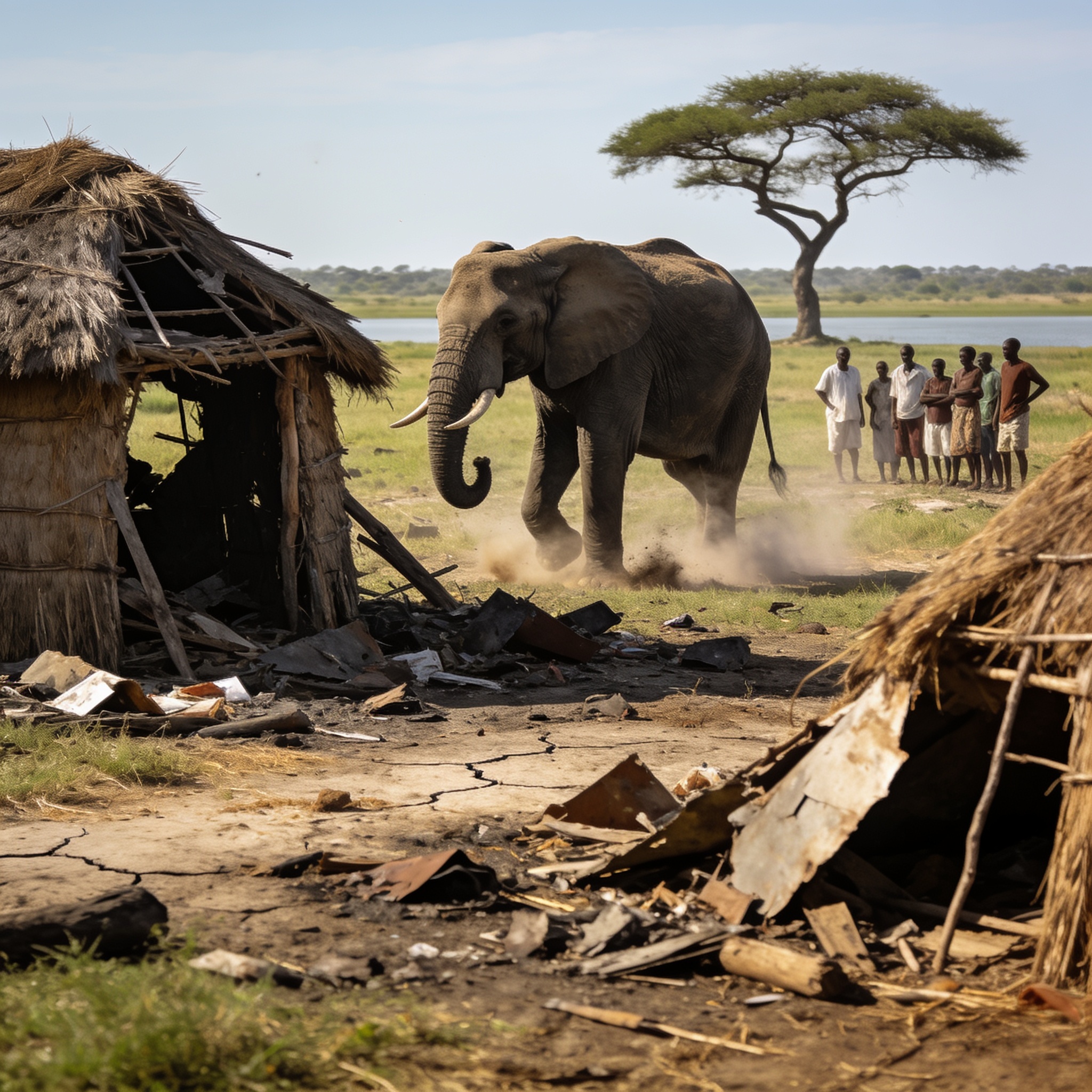
The Zimbabwe Parks and Wildlife Management Authority (ZimParks) has confirmed that a man was killed in an elephant attack at Spurwing Island in the early hours of Sunday morning.
According to ZimParks, the incident occurred at approximately 5:20am. The victim, whose identity has not yet been released, was reportedly attacked by an elephant on the island, which is located in Lake Kariba.
Spurwing Island is a popular tourist destination known for its wildlife, including elephants, which roam freely on the island. While encounters between humans and elephants are common, fatal attacks are rare.
A Growing Crisis
The death at Spurwing Island is the latest in a series of human-wildlife conflict incidents that have been escalating across Zimbabwe. In recent years, the country has seen a sharp rise in clashes between humans and wild animals, particularly elephants, as competition for land and resources intensifies.
Experts attribute the surge to a combination of factors, including prolonged drought, habitat loss, and the encroachment of human settlements into wildlife corridors. As natural habitats shrink, animals are increasingly forced to venture into human-dominated areas in search of food and water.
Elephants, in particular, have been responsible for a significant number of human fatalities and widespread crop destruction. Communities living near national parks and wildlife areas bear the brunt of these conflicts, often losing their livelihoods and, in some cases, their lives.
ZimParks Under Pressure
ZimParks has repeatedly urged the public to exercise caution when encountering wildlife, and has called for increased support for conflict mitigation measures. These include community education programmes, the construction of barriers to keep elephants away from crops, and the provision of compensation for victims.
However, critics argue that the government’s response has been inadequate. Many victims of wildlife attacks have reportedly struggled to receive compensation, and communities feel neglected in the face of a growing threat.
The rising tension between wildlife authorities and local populations highlights the need for a more comprehensive approach to human-wildlife conflict. Conservationists say that sustainable solutions must balance the needs of wildlife with those of people, through better land-use planning, alternative livelihoods, and early warning systems.
As Zimbabwe continues to grapple with this crisis, the tragic death at Spurwing Island serves as a stark reminder of the human cost of human-wildlife conflict. It underscores the urgent need for effective strategies to protect both people and the country’s rich natural heritage.