

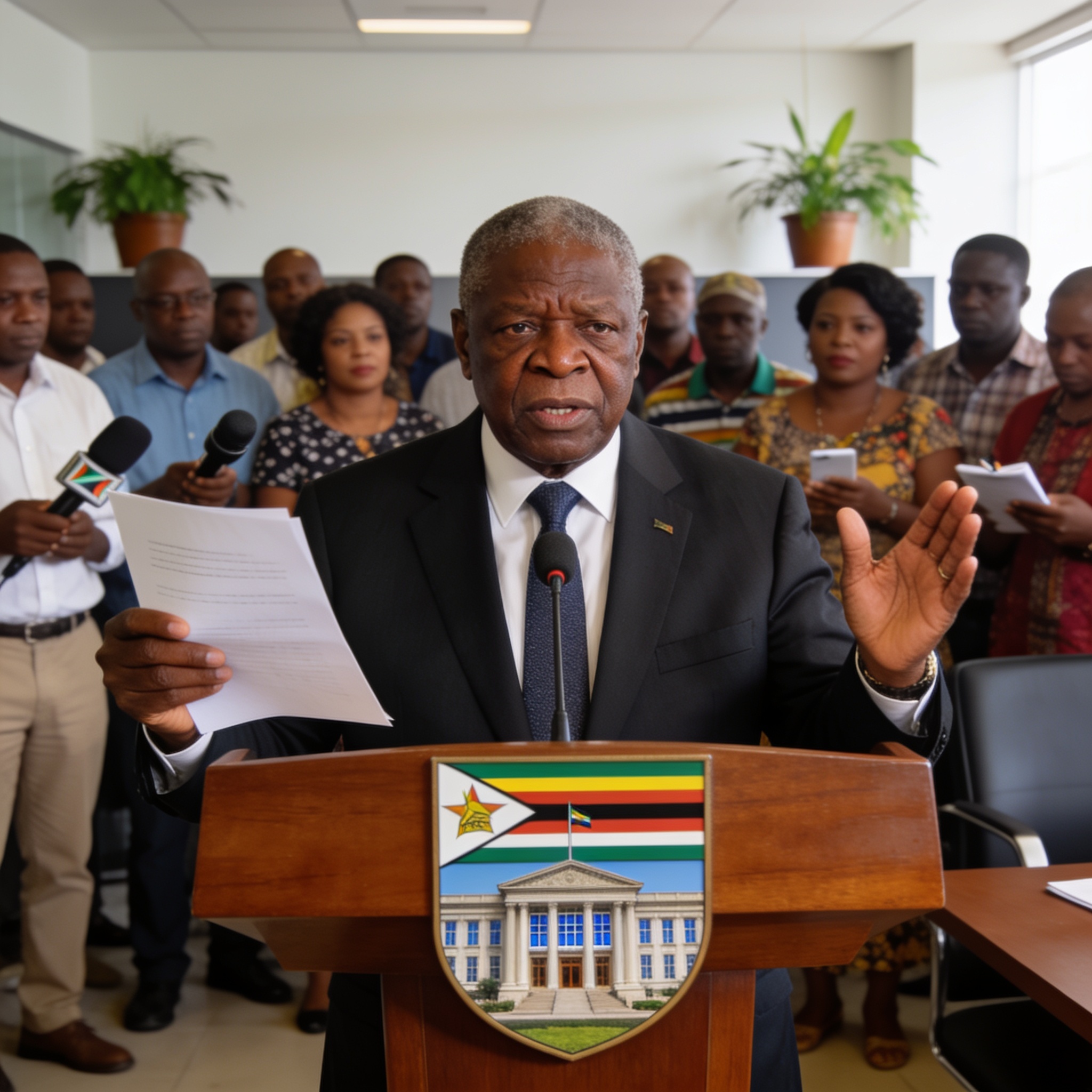
President Emmerson Mnangagwa has officially declared 15 September—his own birthday—a new national public holiday to be known as Munhumutapa Day. The declaration, published in a Government Gazette Extraordinary on 9 September 2026 through Statutory Instrument 148 of 2026, states that the 15th of September every year henceforth shall be a public holiday. The move appears designed to cement his legacy and associate his presidency with the pre-colonial Mutapa Empire.
Munhumutapa, also written as Mwenemutapa, was the royal title used by rulers of the Mutapa Empire, which flourished from the 15th century across parts of present-day Zimbabwe and Mozambique. The title is commonly translated as “lord of the conquered lands.” The government has framed the holiday as a celebration of Zimbabwe’s pre-colonial history and civilisation, but the timing and personal nature of the date have raised eyebrows.
The holiday coincides with Mnangagwa’s 84th birthday, and it comes just months after he pushed through a constitutional amendment extending his second term from five years to seven years—effectively postponing the next presidential election from 2028 to 2030. Some of his supporters have gone further, openly suggesting that his presidency should be transformed into a monarchy. The declaration of Munhumutapa Day is widely seen as part of a broader effort to cultivate a personality cult around the president and align his rule with a royal lineage.
Adding fuel to these concerns, Mnangagwa used his address at the Sanganai/Hlanganani Tourism Expo in Masvingo on the same day to declare that he would still be in power in 2035. Speaking to an audience that included international visitors, he said: “After nine years, when we will be rotating provinces to host this event, I will still be in power.” The remark, which extends his self-projected rule well beyond the constitutional limit of 2030, was met with a mix of amusement and alarm. Critics note that similar offhand comments in the past have proven to be early signals of his true intentions.
The back-to-back announcements have intensified scrutiny of Zimbabwe’s political trajectory. Opposition figures and civil society groups have long warned that the constitutional amendment to extend his term was a step toward indefinite rule, and the new holiday—combined with the explicit 2035 timeline—appears to confirm those fears. While the government insists that Munhumutapa Day is about celebrating national heritage, for many Zimbabweans it symbolises the increasing personalisation of state power and the erosion of democratic institutions.
As the country prepares to observe the first Munhumutapa Day next week, the question on many minds is whether this is merely a symbolic gesture or another calculated move in a broader strategy to entrench presidential power beyond what the constitution allows. With the 2030 election now legally off the table and the president speaking openly about 2035, Zimbabwe appears to be entering uncharted political territory.