

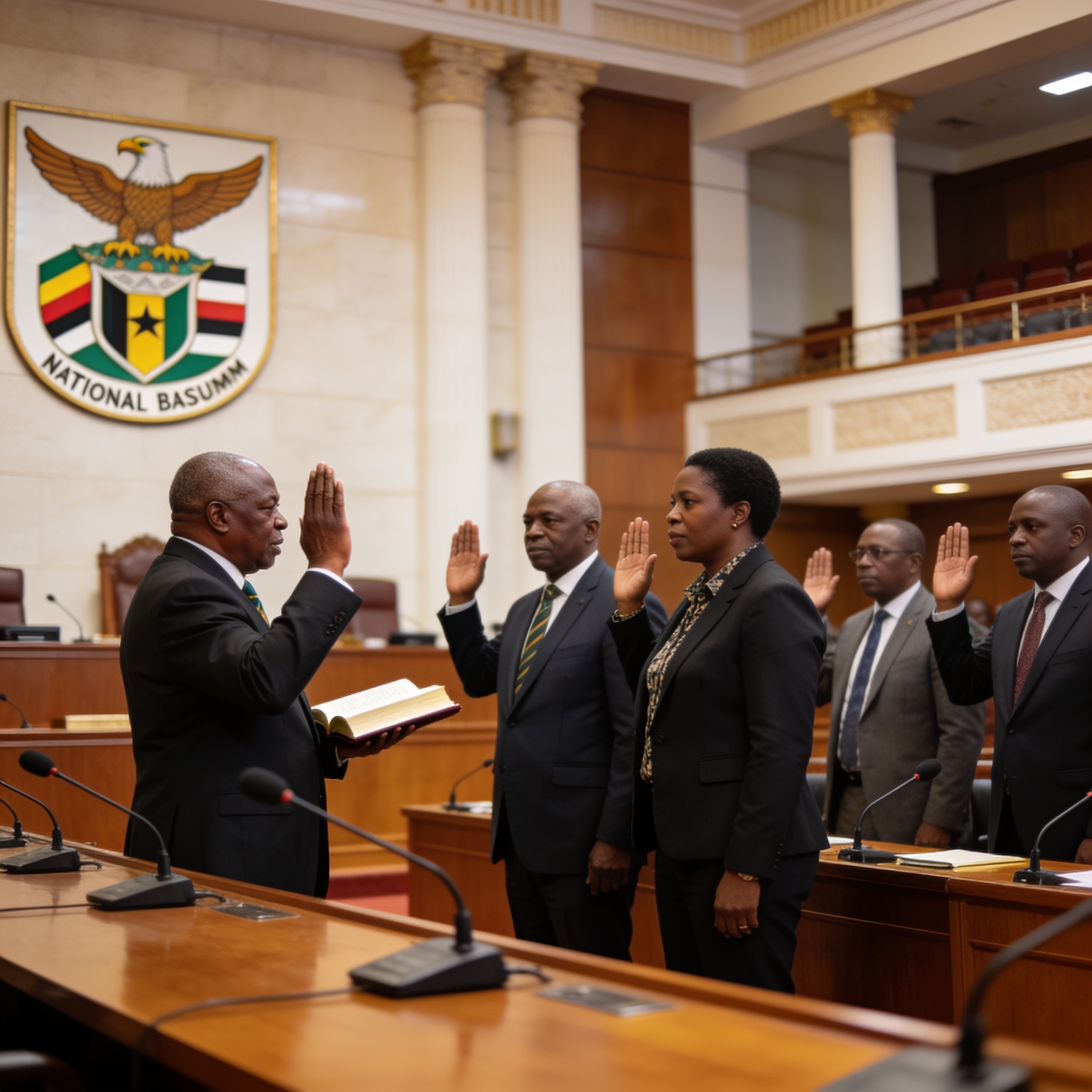
President Emmerson Mnangagwa’s controversial appointments to the Senate took effect today as businessman Kudakwashe Tagwirei and nine other individuals were sworn in, bringing the Upper House to 90 members.
The swearing-in ceremony followed the enactment of Constitutional Amendment Act No. 3, which allows the President to appoint up to 10 senators based on their professional skills and competencies. The new senators include Jabulani Sibanda, Mary Mliswa, Nokuthula Matsikenyere, Kudakwashe Tagwirei, Godwills Masimirembwa, Lucy Chitaga, Major-General (Rtd) Gibson Mashingaidze, Makhosini Hlongwane, Brilliant Dube, and Irene Mutumbwa.
However, the appointments have drawn sharp criticism, with many arguing that the selected individuals were chosen primarily for their loyalty to Zanu PF rather than any demonstrated expertise. Several of the appointees hold key positions within the ruling party, raising questions about the independence of the Senate.
Tagwirei, who serves as a presidential advisor, has been a vocal supporter of the constitutional amendment and is increasingly seen as a potential successor to Mnangagwa. His entry into the Senate marks another step in his political ascent.
Others, like Sibanda, Masimirembwa, and Mliswa, chair Zanu PF provincial structures, while Mashingaidze leads the War Veterans League in Masvingo. Hlongwane, a figure from the post-Mugabe era, makes a return to active politics through this appointment.
Critics have also pointed to the case of Brilliant Dube, who previously opposed the amendment as part of the Constitution Defenders Forum but has since changed her position and is now believed to have been rewarded with a Senate seat.
The expansion of the Senate is part of broader constitutional changes that have been contested by opposition parties and civil society groups, who argue that the amendments concentrate power in the presidency.