

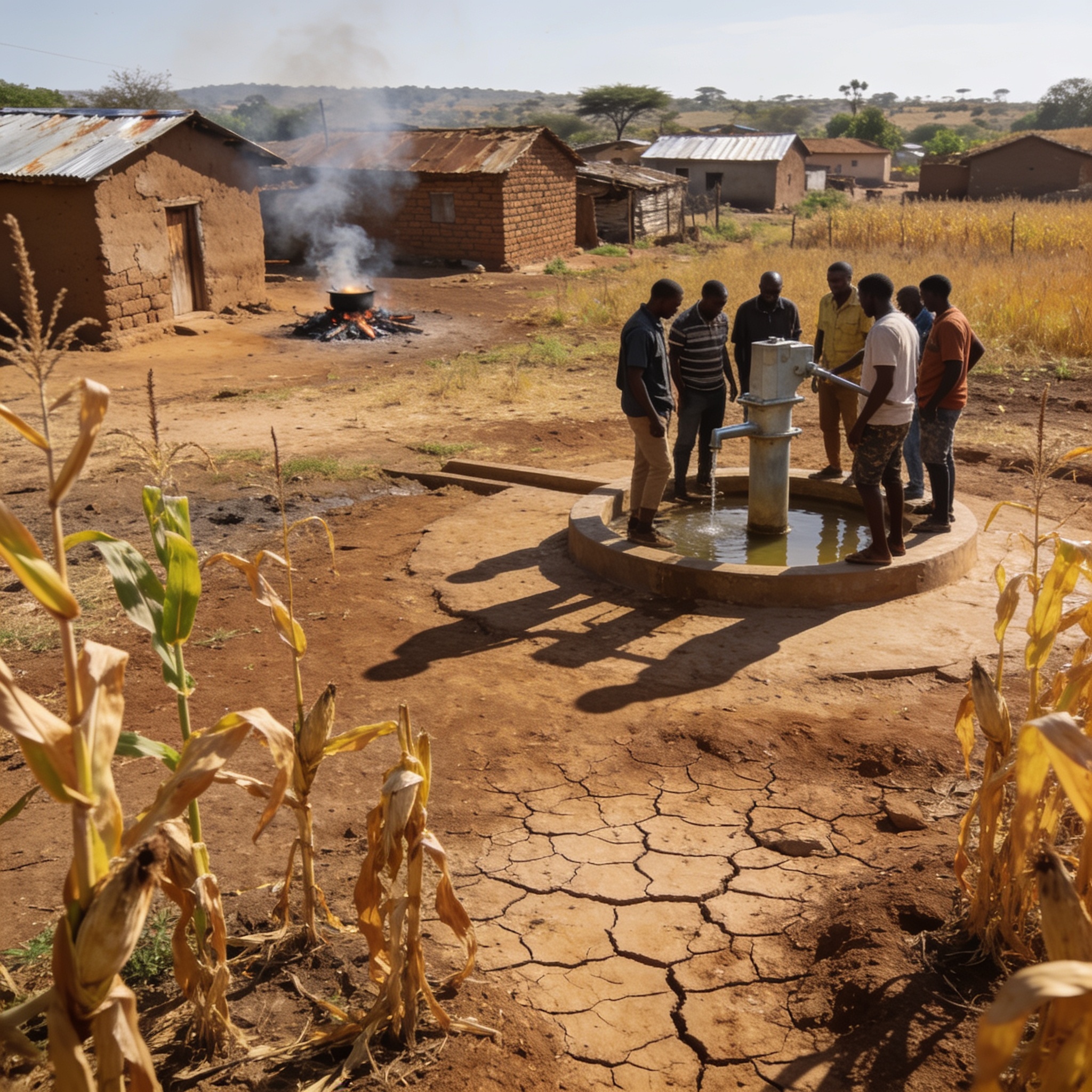
The Meteorological Services Department (MSD) has released its national climate outlook for the 2026/27 summer season, warning that Zimbabwe is likely to experience a hotter and drier-than-normal rainfall period from October 2026 to March 2027. The forecast, issued on 11 September 2026, points to a high probability of below-normal rainfall across the country, driven by the ongoing El Niño-Southern Oscillation (ENSO) and a positive Indian Ocean Dipole (IOD).
According to the MSD, ENSO is currently in its warm (El Niño) phase and is expected to persist throughout the forecast period. The IOD is also positive and likely to remain so until late January 2027 before shifting to neutral in February. These large-scale climate drivers are known to suppress rainfall over southern Africa, increasing the risk of drought conditions.
Regional Rainfall Breakdown
The outlook provides a detailed monthly breakdown for the first half of the season:
- October 2026: Most of the country, including Masvingo, Matabeleland provinces, Bulawayo, Midlands, southern Mashonaland West, southern Mashonaland East, and greater Manicaland, faces an increased chance of below-normal rainfall. Extreme northern areas may see normal to below-normal conditions.
- November 2026: Below-normal rainfall is expected across almost the entire country, with only the far northern parts of Mashonaland West and Central showing a chance of normal to below-normal totals.
- December 2026: A mixed picture emerges. Southern Matabeleland South, extreme southern Midlands, and southwestern Masvingo could receive normal to above-normal rainfall. However, most other regions, including Harare, Mashonaland provinces, and much of Manicaland, are likely to see below-normal totals.
For the period January to March 2027, the MSD anticipates below-normal rainfall across most of the country, though southern and western parts may experience normal rainfall with a bias toward below-normal totals. The department cautioned that the actual rainfall distribution will depend on local and short-term weather systems, which cannot be fully captured in a seasonal forecast.
Onset and Temperature Outlook
The mean onset of the rainy season in Zimbabwe typically occurs from November to early December. However, the MSD warns that for the 2026/27 season, rainfall patterns are projected to be highly erratic, with a significant portion of the country expected to see no effective start to the season. Historical analogue seasons include 2023/24 and 2015/16, both marked by widespread failure of the seasonal onset.
Warmer than normal conditions are expected to prevail across the first three months of the season (October–December 2026), with an update for the remaining months to be issued later. Despite the dry signal, the MSD emphasised that the risk of violent storms, flash floods, strong winds, and lightning strikes remains significant due to the combination of prolonged dry spells and excess atmospheric heat.
Recommendations
The MSD has urged proactive measures including water harvesting, irrigation planning, drainage maintenance, and public health preparedness. The department stressed that a seasonal forecast is a long-term planning tool and does not replace the need for continuous short-term weather updates, which are crucial for capturing dry spells and the actual onset of the season.