

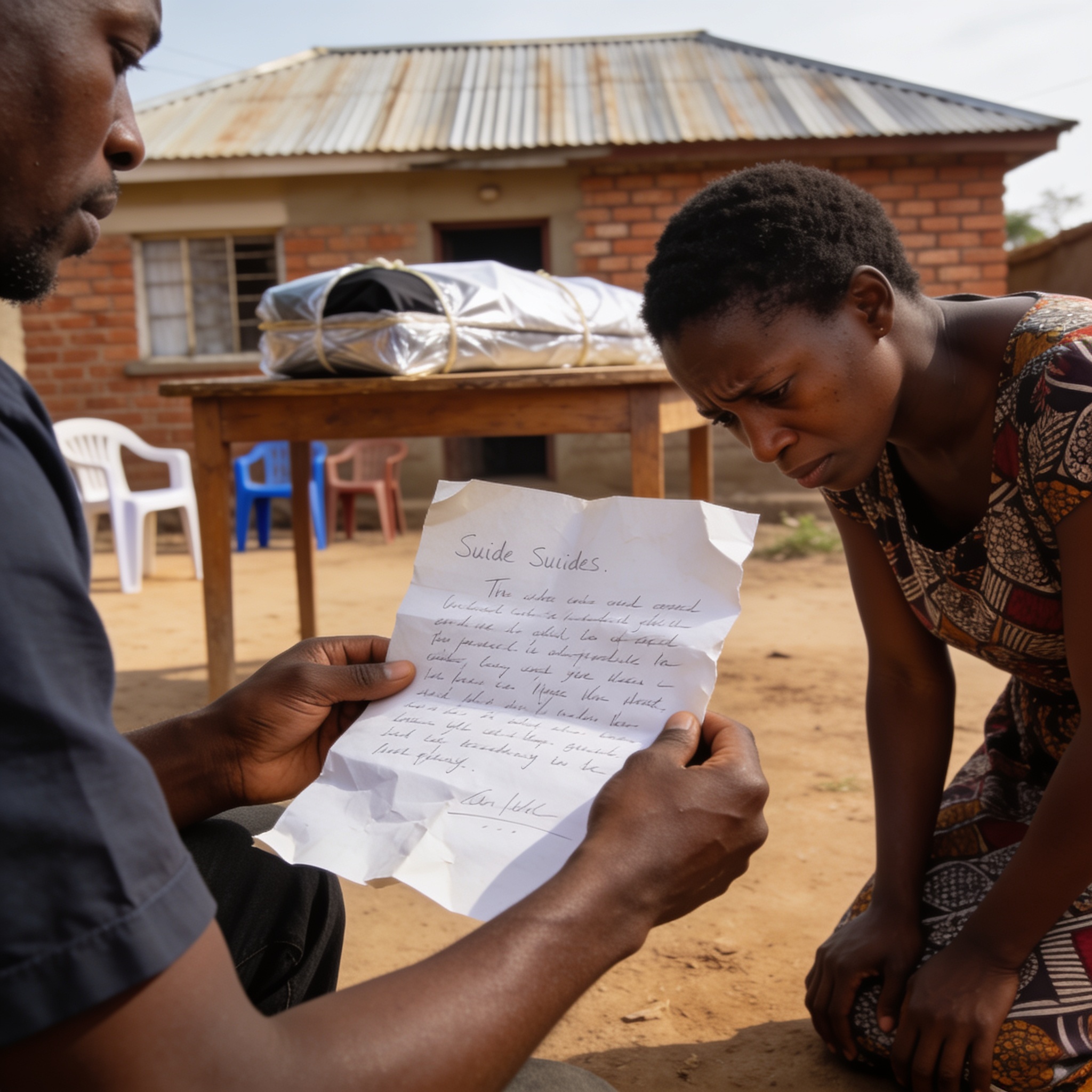
A note said to have been left behind by a nurse who hacked her husband to death with an axe before taking her own life has widened an already bitter rift between the two families, after it surfaced while her personal belongings were being packed for burial.
Lyliosa Chirara, 43, is alleged to have attacked her husband, Zimbabwe Human Rights Commission (ZHRC) Commissioner Martin Muduva, 42, at their home in Dzivarasekwa Extension following a marital dispute. She is said to have died by suicide shortly afterwards.
Note found among clothes destined for the grave
According to accounts given to local journalists, the note came to light during preparations to transport Chirara’s body to Njanja for burial. In keeping with custom, her clothing and other personal effects were being gathered so they could be placed in the grave with her.
It was during that packing that a group of women reportedly came across the note tucked among her clothes together with other papers. They are said to have read it before mourners had assembled at the family home in Dzivarasekwa Extension.
A close friend of the deceased, Nancy Tembo, said the discovery was immediately reported to the Muduva family, who objected to the contents being read aloud. She said the Chirara side went ahead and read it anyway, a decision she blamed for inflaming tensions between the two families on the day.
Tembo also stated that no member of the Muduva family attended Chirara’s burial. A relative who spoke on condition of anonymity said the couple had at some point looked into the possibility of divorcing.
What the note reportedly says
In the document, Chirara is said to have asked her relatives for forgiveness, writing that she had been pushed to act by what she described as years of torment and distress. She reportedly stated that she had meant her marriage vows literally, recalling the pledge that their union would end only in death.
She is said to have alleged that her husband had not shared a bedroom with her or been intimate with her between 2022 and 2025, and that he regarded his doctorate as reason enough not to remain with a wife he considered uneducated. She further alleged that he concealed his earnings from her, told her she had no right to know how much he earned, and discouraged her from starting a small poultry and egg business.
The note also reportedly claims that Muduva spent about a year living with another woman and later returned to tell her he had found a partner better suited to his standing — someone who understood technology and could accompany him to public functions. According to the account, Chirara said she only learned of his marriage to the other woman after seeing a social media post about a bride price ceremony.
She is said to have named Patience Mangwiro repeatedly in the note, writing that she hoped the other woman would now be happy and describing her as the daughter-in-law the Muduva family had wanted. She also directed criticism at a family elder, accusing him of encouraging her husband to find a more educated wife and of failing to intervene in her marital difficulties.
Addressing her children, she reportedly wrote that they knew nothing of the situation, that she had wanted to see them grow up, but that stress would have claimed her life regardless. She closed by asking the elder to look after them.
Police say investigations continue
National police spokesperson Commissioner Paul Nyathi said the Zimbabwe Republic Police had not yet seen the note that has been reported in the media, and that both the murder and the death by suicide in Dzivarasekwa Extension were under investigation.
Because the note has not been formally placed before investigators, its contents remain allegations that have not been tested, and none of the claims made in it have been independently verified.
Custom, grief and a divided family
The dispute over the note reflects how quickly a bereavement can turn into a confrontation when two families are already at odds. In many Zimbabwean communities, the packing of a deceased person’s clothes is an emotionally charged ritual handled by close female relatives, and what is found or said during that process can shape relations between in-laws for years.
In this case, the disagreement over whether the note should be read at all appears to have hardened positions on both sides before the body had even left for Njanja, leaving relatives divided over the burial and over how the couple’s final months together should be understood.