

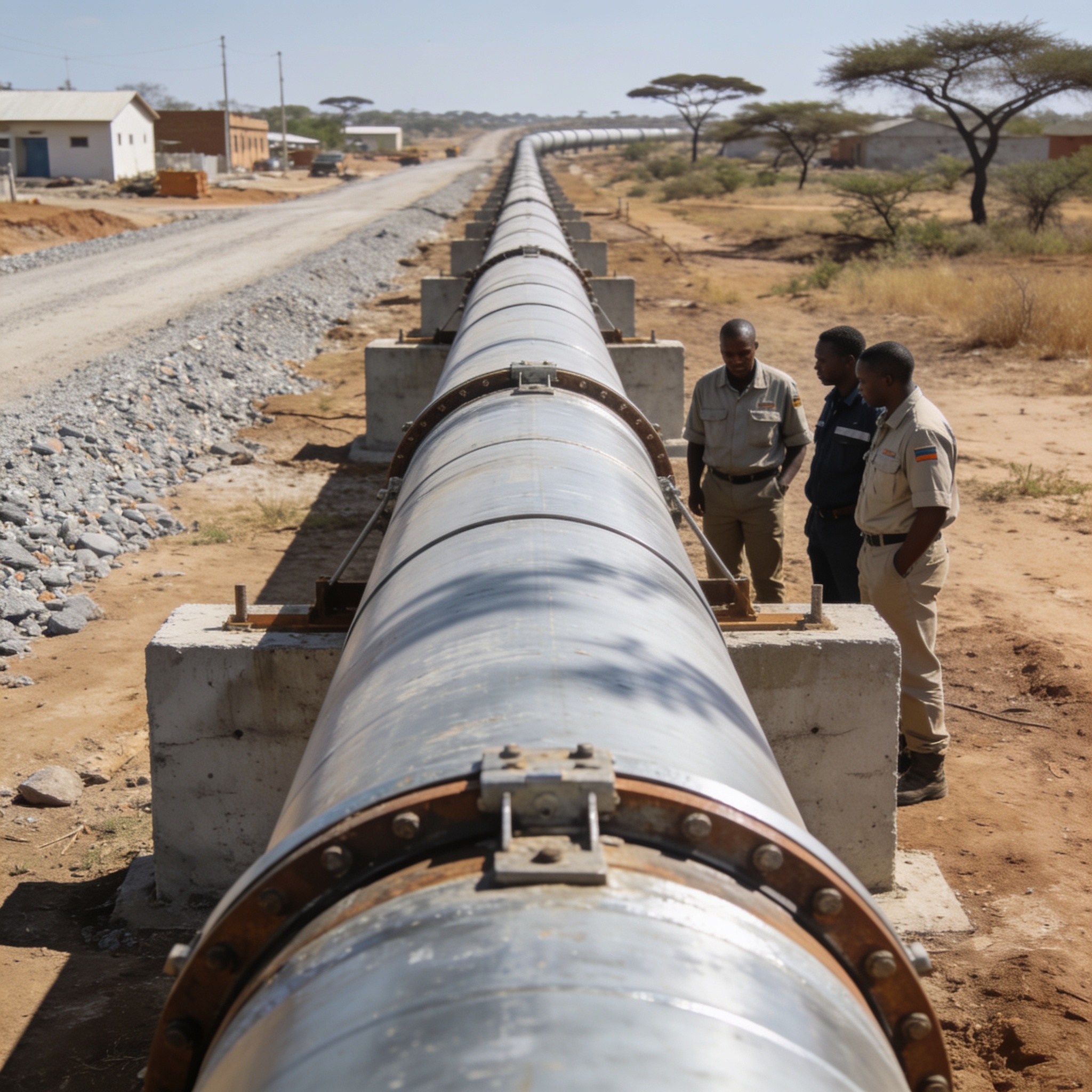
Bulawayo Mayor David Coltart has warned that the 252-kilometre Gwayi-Shangani–Bulawayo pipeline could take more than two centuries to finish unless the Government dramatically accelerates the rate at which it releases money for the project.
His warning came after reports that civil works on the 10-megawatt Gwayi-Shangani mini-hydropower station in Matabeleland North are progressing well and are expected to be completed by the end of the year.
A 217-year timeline at current spending
Coltart welcomed the progress at the power station but made clear that the City of Bulawayo’s focus is elsewhere — specifically the 252km pipeline meant to carry raw water from Gwayi-Shangani Dam to the city.
Writing on X, he noted that the Zimbabwe National Water Authority (ZINWA) recently estimated the pipeline’s cost at US$543 million, with no clarity on how that bill will be financed.
He then laid out the arithmetic that has alarmed residents: Government spent roughly US$2.5 million on the pipeline last year. At that disbursement rate, he said, the pipeline would not be finished for about 217 years.
The mayor’s figures suggest the gap between the project’s ambition and its funding is widening rather than closing.
Costs climb past US$550 million
A project progress report dated 10 July 2026 puts the four major contract packages under the National Matabeleland Zambezi Water Project at a combined US$554.44 million.
Those packages break down as follows:
- Pipeline construction: US$175.14 million
- Pump stations: US$167.73 million
- Pipe supply: US$130.33 million
- Water treatment plant: US$81.25 million
The shortfall matters because work on the dam itself has raced ahead of the infrastructure needed to move its water to Bulawayo.
Dam nearly three-quarters built, pipeline far behind
According to the same progress report, the dam is 72.4 per cent complete, while the pipeline is only 16 per cent complete and the booster pump stations just 18 per cent complete.
Construction of the pipeline was awarded to 12 contractors in March 2022, with each allocated roughly 21 kilometres of the route. Work stalled later that year because of inconsistent funding, and the contracts have struggled to regain momentum since.
Once operational, the pipeline is designed to deliver 220 megalitres of water per day to Bulawayo — a volume that would transform supply for a city that has endured years of severe water shedding.
Why Bulawayo is watching closely
Bulawayo has long depended on a handful of dams and borehole fields that are vulnerable to drought, and households in several suburbs routinely go for days without tap water. The Gwayi-Shangani scheme has been presented for decades as the permanent solution to that deficit.
Completion of the dam without a functioning conveyor system would leave the city’s water crisis essentially unresolved, since raw water sitting in Matabeleland North is of little use to residents and industry more than 250 kilometres away.
Coltart acknowledged the hydropower milestone as good news, but repeated that from the city’s perspective the pipeline remains the decisive piece of the puzzle.
What happens next
With no clear financing plan for the US$543 million pipeline, the project’s future now hinges on whether Treasury can shift from token annual disbursements to a funding schedule that matches the scale of the works.
Until that happens, the mayor’s 217-year projection will serve as a stark reminder of how far the National Matabeleland Zambezi Water Project still has to travel — and how much of Bulawayo’s future depends on it arriving.