
Zimbabwe’s national agenda shifts from bumper maize harvest to climate risk
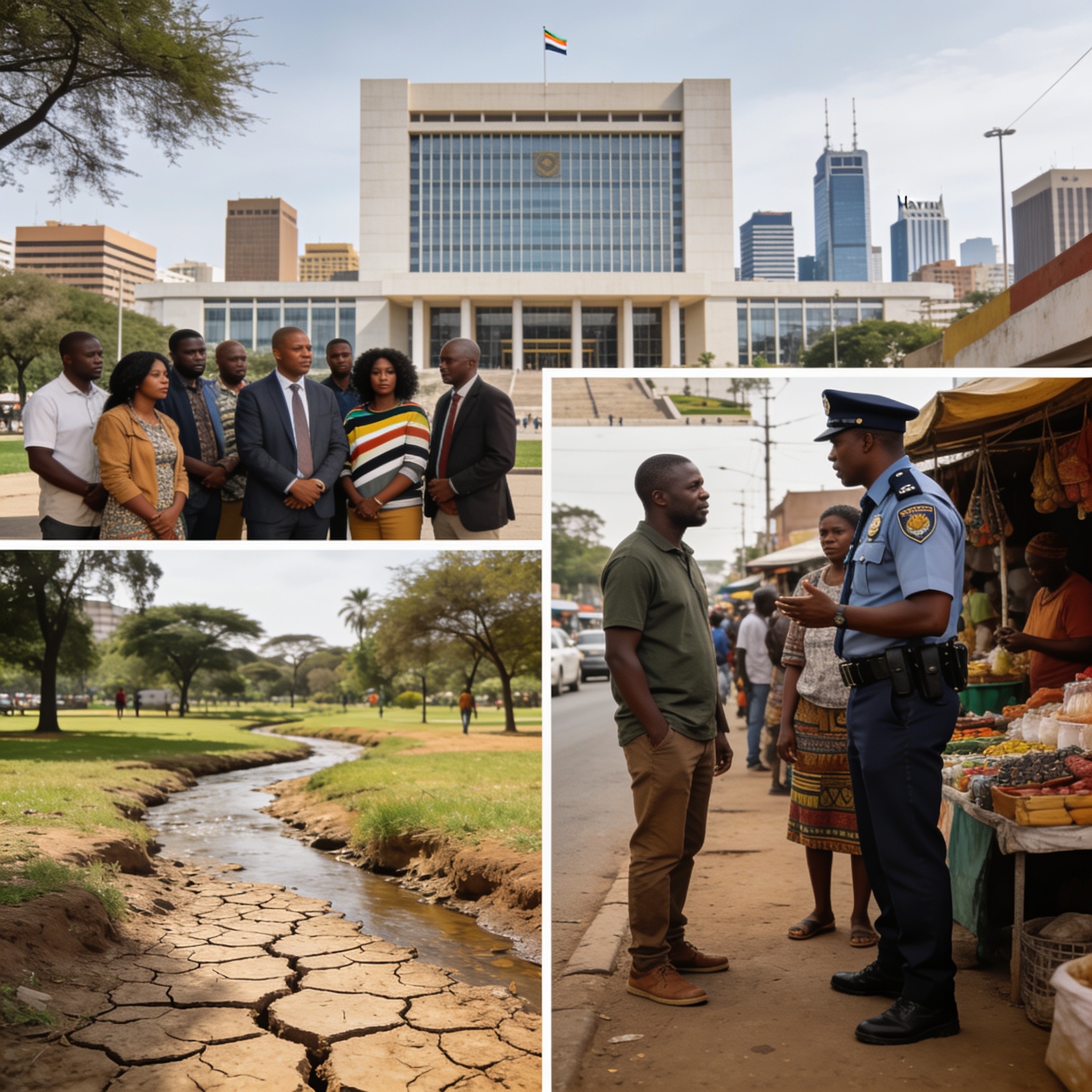
After Zimbabwe’s most successful maize campaign in recent memory, government officials and rural development partners are turning attention to the next climatic threat. El Niño conditions are expected to stress water supplies, livestock grazing and crop cycles, especially in southern provinces. Matabeleland South’s seven districts have been asked to produce locally tailored preparedness plans, reflecting the uneven vulnerability of drylands, riverine communities and communal grazing areas.
Experts say conventional weather forecasts and irrigation schemes alone will not be enough. Indigenous knowledge systems—such as early signs of rainfall failure, drought-resistant seed storage, traditional water harvesting, livestock movement patterns and spiritual practices—can strengthen household resilience. The policy challenge is to combine community-based indicators with modern climate data, grain reserves and district disaster budgets before drought becomes food emergency.
Politics moves to Chinhoyi as ZANU PF prepares national conference
The ruling ZANU PF has stepped up preparations for its 23rd National People’s Conference, scheduled for Chinhoyi, Mashonaland West. Party structures, including the Politburo, are expected to align conference priorities with the State of the Nation agenda and internal organisational questions. Secretary General Advocate Jacob Mudenda has called for the gathering to produce measurable outcomes rather than speeches, with delegates urged to focus on institutional performance, service delivery and local representation.
Outside the party, opposition figures are also watching the political calendar. Former CCC leader Nelson Chamisa warned against a distracted nation and criticised what he called the normalisation of indefinite tenure in African politics, referring to the #NoTo2050 campaign and discussions around Zimbabwe’s electoral timetable. Supporters of the ruling party have defended their reform agenda and Vision 2030, while the Constitutional Amendment Act No. 3 continues to shape debate about term provisions and institutional continuity.
Beitbridge crime cases test border security
Beitbridge, the country’s busiest land border, remains a focal point for security operations. Police say a vehicle taken at gunpoint during the weekend has been recovered and a girl reported kidnapped has been released as six suspects linked to armed robbery are in custody. Separately, six ZIMRA workers appeared in court accused of stealing 147 bottles of BronCleer cough syrup from the Freight Terminal Warehouse. The State alleges the suspects used access privileges and a fire extinguisher pipe route to remove the goods before detectives stopped a vehicle near the Roman Catholic Church in Dulibadzimu. The syrup and car are held as exhibits.
Court cases involving suspected abuse of public positions underline the need for tighter warehouse controls, CCTV monitoring, transparent cash-management systems and faster internal audits at border posts.
Lake Kariba closure for cleansing ceremony after ferry disaster
Commercial, passenger and recreational marine activity on Lake Kariba will be suspended on 4 and 5 October to allow a traditional cleansing ceremony following the Mbuya Nehanda ferry tragedy. Kariba District Development Coordinator Rodwell Mtetwa said Chief Mola and other traditional leaders would perform rites aimed at honouring those who died, calming grieving communities and seeking safe waters for future navigation. The 11 August disaster left at least 97 people dead and 77 rescued, prompting a state of disaster and investigations into vessel operations and passenger safety.
The closure raises questions about compensation, rescue protocols, boat inspection regimes and whether traditional mourning practices can be integrated into emergency management without disrupting economic travel and tourism.
Burial delayed as forensic dispute continues in Masvingo
In Masvingo, the family of Lovemore Taurayi Takawira has been unable to bury him more than four years after he disappeared during a dispute at Mushandike Resettlement Area, near the estate of Chief Fortune Charumbira. His body was found in November 2022, but DNA results have not been produced, and some alleged assailants claim he is alive. Police have moved the matter to the Chief Director Forensic Science Directorate for urgent engagement with the National University of Science and Technology laboratory.
For families waiting in limbo, the case exposes fragility in forensic evidence management, laboratory capacity and communication between investigators, prosecutors and bereaved relatives.
Health, business and infrastructure headlines
A Chitungwiza court remanded a man who allegedly posed as a doctor and his accomplice on murder charges after a woman died during an unsafe goitre removal described by authorities as a razor blade procedure. The case adds pressure on regulators to verify medical credentials and combat unlicensed cosmetic and surgical services.
In Harare, a 77-year-old man and a 21-year-old suspect are in custody after two women reportedly lost money in a scheme advertising fake Ministry of Health nursing places through WhatsApp groups. Prosecutors say the pair demanded initial fees for enrolment, uniforms and administrative processing.
On the private sector front, Econet InfraCo reported cutting diesel consumption by about 30 percent through artificial intelligence, as energy costs climb amid global Middle East tensions. Namib Minerals secured a US$6.5 million non-dilutive term loan from BancABC to advance Redwing Mine resource drilling and improve bankability, strengthening its liquidity position.
Zimbabwe also hosts investment momentum: the Zimbabwe Economic Development Conference opened in Bulawayo with fintech, digital payments, economic resilience and smart infrastructure on the agenda, while the 19th COMESA Business Forum is expected to gather regional leaders in Harare next month to promote trade and investment.
Tourism, aquaculture and public image
Tourism and Hospitality Industry Minister Barbara Rwodzi has been nominated for the Unstoppable African Cabinet Minister of the Year award, an endorsement of tourism recovery initiatives and destination marketing. The European Union has praised Zimbabwe’s tilapia growth under a regional aquaculture programme, with US$3.5 million invested locally as part of a €48 million continental development effort, highlighting Masvingo’s fish-farming potential.
The Borrowdale Motor Show will convene on 3 October at Pomona Commercial Centre, linking vehicle dealers, financing firms, insurers, road-safety groups, rental companies and parts suppliers in a one-day mobility fair.
Road modernisation in Manicaland is also moving forward, with contractors on site for upgrades to the Headlands-Mayo and Chipinge-Mt Selinda corridors, supporting rural mobility, agricultural markets and cross-border tourism.
Cybersecurity concerns and social issues
Diplomatic and ICT observers have raised concern after public documents associated with Zimbabwe’s Embassy in London listed free Yahoo Mail addresses among consular contact points, alongside official government addresses. Critics argue that sovereign communication should be protected through controlled government email, strong authentication, audit trails, data-residency rules and incident response capabilities. The issue has broader implications for ministries, parastatals and state-owned enterprises that may rely on consumer email services for sensitive correspondence.
Internationally, African faith leaders, scholars and constitutional thinkers launched the African Democratic Covenant, calling for a pause on laws that criminalise sexual minorities and urging democratic dialogue rooted in dignity, sovereignty and constitutional pluralism. The movement’s emphasis on African-led debate may influence regional conversations around human rights, governance and media representation.
Heroes’ banner dispute and cultural memory
Political symbolism remains contested as a Dr Arthur Makanda-led chapter of the Fallen Heroes Trust of Zimbabwe reportedly severed links with the parent organisation and introduced an All-Inclusive Heroes’ Banner, while fallen heroes’ reburials continue. The episode shows how liberation narratives are still used to shape legitimacy, memory politics and factional alignment within the national story.