

Zimbabwe’s public conversation on 30 September 2026 is being pulled in several directions at once. At the national level, lawmakers have been presented with a dense list of bills. At the municipal level, questions about sanitation funding, pollution and emergency repairs are getting louder. At the economic level, the central bank has taken another small step toward easing borrowing costs while still keeping financial conditions tight. For Zim Newspaper readers, the common thread is the distance between formal announcements and the daily experience of costs, clinics, water taps, jobs and local government accountability.
A legislative slate that tries to cover too much ground
The newly opened parliamentary session brings proposals that stretch across health, agriculture, transport, justice and governance. The list includes reforms connected to water administration, tobacco regulation, medicine control, food safety, mental health, road funding, shipping, legal aid, child justice and whistleblower protection. It also touches veterans benefits and constitutional adjustments after recent amendment work.
On paper, that breadth can look like a response to long-standing gaps in policy. Zimbabwe has needed updated frameworks for healthcare delivery, transport funding and environmental administration. Yet the scale of the agenda also raises a familiar risk: if too many bills are tabled at once, Parliament can become a processing line rather than a space for careful scrutiny. Citizens will want to know which proposals will change practice and which will remain symbolic language in the statute book.
The political context is equally important. Some analysts see repeated discussions about presidential terms as a distraction from livelihood failures. Whether or not readers agree with that framing, the criticism reflects a broader frustration: constitutional and party debates often dominate airtime while households wait for predictable services and fairer economic outcomes.
Urban sewage and the politics of diverted revenue
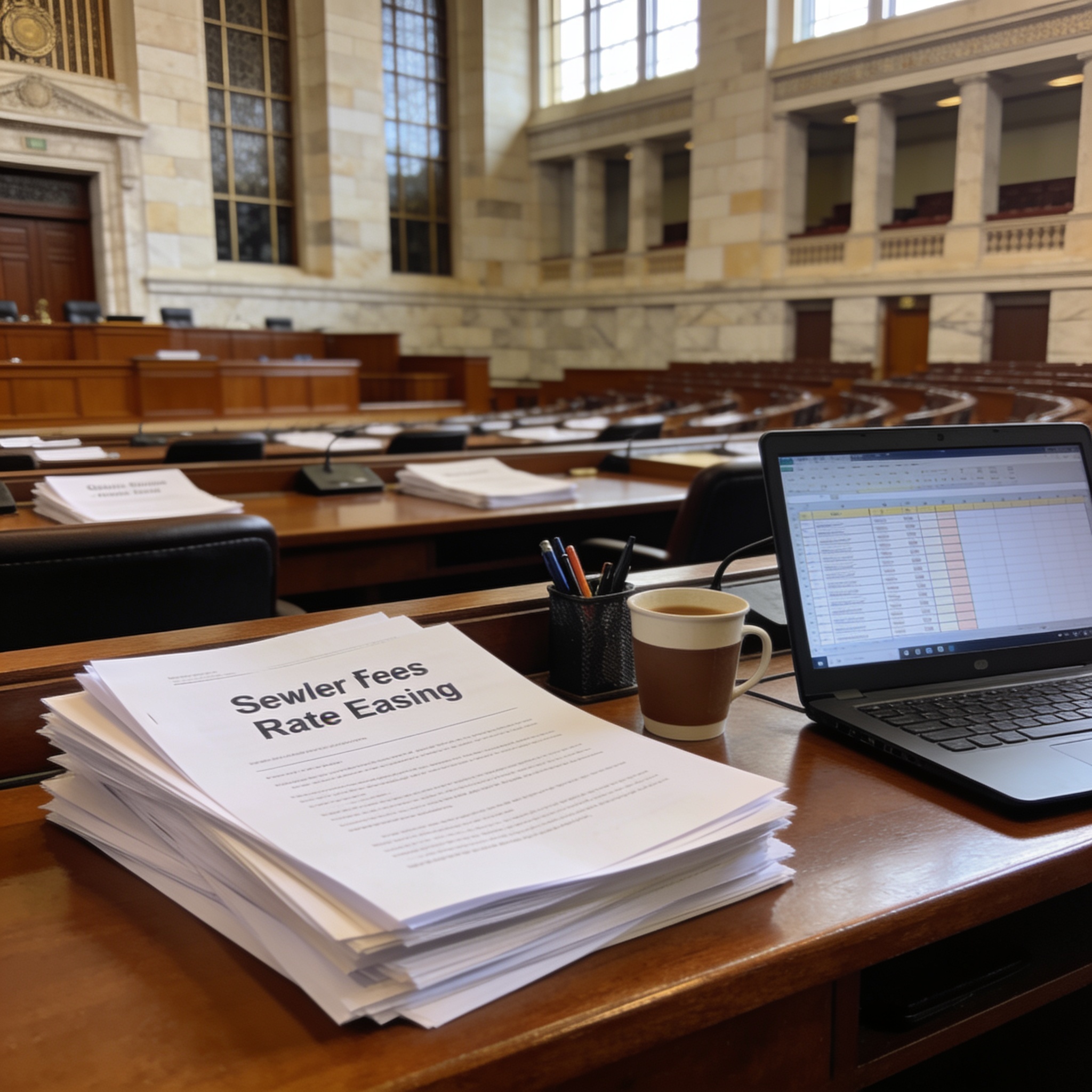
The report on Harare and Chitungwiza is one of the most concrete pieces of evidence in this week’s digest. A parliamentary committee has accused the two municipalities of allowing wastewater revenue and related fines to disappear into general budgets instead of being protected for sewer and water infrastructure. The result, according to the findings, is years of deferred maintenance at sensitive sites and now a request for emergency central government support worth about US$9.3 million.
For residents, the stakes are not abstract. Raw sewage discharge risks public health, water quality and long-term environmental damage. If local authorities are asking national funds to fix failures that service charges were meant to address, the political question becomes about trust. Were fees collected fairly, were repairs prioritised, and were enforcement penalties used in ways that actually improved infrastructure?
The committee’s suggested response is ring-fencing. That means wastewater charges and environmental fines should be legally channelled toward repairs, pollution control and related capital works. If implemented well, that rule could help prevent future cycles where residents pay but infrastructure decays. If implemented poorly, it could simply move money from one opaque account to another. Transparency will matter as much as the statutory language.
A rate cut that may still feel expensive for businesses
The Reserve Bank’s decision to lower the policy rate from 30 percent to 27.5 percent is a signal of cautious easing. Annual inflation is projected near 7 percent, and the bank has argued that monetary policy needs to remain restrictive enough to anchor expectations and protect currency stability. The move also lowered rates linked to targeted lending and capped on-lending to productive sectors, while leaving reserve requirements unchanged.
Even with the cut, credit conditions remain tight. For firms seeking working capital or expansion funds, the real cost of borrowing after inflation is still high. The central bank’s concern is understandable: premature easing could undermine the progress on price stability. But the trade-off is that investment, employment and productivity may remain constrained for longer than business owners and job seekers hope. Zimbabwe’s broader economic story this year is not simply inflation or currency stability. It is whether lower headline risks translate into productive activity.
The Supreme Court changes the labour appeal route
One of the most consequential legal developments for ordinary employees is the Supreme Court’s ruling on appeals by workers dismissed under company disciplinary codes. The court clarified that an aggrieved worker can go directly to the Labour Court under one statutory route, rather than first being forced through a labour officer’s conciliation process. The judgment rejects the idea that a newer provision automatically replaced the older appellate route.
The practical effect is important. Workers who have already been through an internal disciplinary process may have a faster or clearer path to judicial review. At the same time, the court did not treat conciliation as irrelevant. It recognised that the labour officer route remains available, but it is not a mandatory barrier when the real dispute is about the merits of a dismissal already decided by an employer code process.
For employers, the ruling is a reminder that disciplinary procedures must be fair, evidence-based and carefully documented. For employees, it strengthens access to justice. The case arose from a workplace safety dispute over an operator allegedly impaired by alcohol. The company had argued for a preliminary procedural bar, but the court ultimately allowed the substantive challenge to proceed. That reasoning may now shape many similar cases.
Local rules, communal land and the Beitbridge deadline
Provincial governance also shows how formal authority and economic survival collide. In Matabeleland South, a ministerial warning directed traditional leaders not to sell communal land. That is not merely a land-administration point. Communal tenure affects livelihoods, social cohesion and future development. Unregulated transactions can entrench disputes over who has the right to use or allocate land.
In Beitbridge, a municipal deadline for informal traders and property owners to stop unlawful practices and remove illegal structures raises a different tension. Local governments need order, road access and safety standards. But traders often rely on informal commerce because formal opportunities are limited. The question for readers is whether enforcement will be accompanied by practical transition support, fair notice and proportionate remedies.
Health skills and community memory
Outside the political headlines, a breast cancer masterclass hosted in Bulawayo shows how specialist surgical training can strengthen services for Harare and Bulawayo patients. Such skills transfer matters in a country where access to experienced clinicians remains uneven. Public hospitals need trained personnel, diagnostic capacity and continuity of care, and regional collaboration is a modest but meaningful path.
Cultural and sporting events also remain part of community resilience. Plans to honour a late theatre member, a centenary-linked Highlanders programme, upcoming netball and rugby fixtures and possible cross-border musical collaboration show that public life is not only policy. It includes shared spaces, grief, celebration and identity. These items may seem lighter, but they are still how Zimbabweans make sense of difficult weeks.
What readers should watch next
The coming weeks should test whether Parliament can handle its broad legislative docket without becoming a rubber stamp. Readers should watch for budget details, not just bill titles. In sanitation, the key questions are whether proposed financing can be audited and whether municipal accounts show clear protection of sewer funds. In monetary policy, the next indicator is not the policy rate alone but lending to productive sectors, employment and price stability. In labour law, look for how many dismissed workers actually reach the Labour Court and how quickly decisions are issued.
For Zim Newspaper, the 30 September headlines are best read together. Zimbabwe has a long reform agenda, a cautious monetary adjustment, a court decision that opens procedural space for workers and urgent local infrastructure gaps. The country may not be short of announcements. What it needs is visible implementation that changes the cost of a clinic visit, the reliability of a water supply, the fairness of a workplace process and the confidence of a trader trying to survive.